
Ending 'Net Zero' and Building Energy Security
Reliable, Affordable Power for All Australians
Introduction
Australia’s energy policy must keep the lights on, protect Australian jobs, and put Australians first.
But Australians have been let down by proponents of the radical ‘net zero’ agenda. ‘Net zero’ is destroying Australia.
The promise of ‘net zero’ was simple – 100% renewables would mean cheaper power bills – but the reality is very different. The burden of ‘net zero’ does not fall on the people who shout the loudest about ‘saving the planet’.
The Reality of 'Net Zero'
- Families opening power bills they cannot afford
- Small businesses cutting hours or shutting their doors
- Factories closing or moving offshore due to unreliable, unaffordable energy
- Reliable baseload power shut down before ready replacements exist
- Households pushed into expensive technology and costly upgrades they never asked for
The 'Net Zero' Fallacy
The key architects of ‘net zero’ – the Australian Labor Party, the Liberal Party of Australia, the National Party and the Australian Greens – demanded Australia introduce job-destroying energy policies as part of our contribution to a ‘concerted global effort’ to reduce human-caused greenhouse gas emissions.
Australia is a signatory to the Paris Agreement (signed in 2016 under the Turnbull Coalition Government), a legally-binding international treaty with the nominal aim of limiting global temperature rise to below 2°C from ‘pre-industrial levels’. Australia’s reduction target under the Albanese Labor Government is 43% below 2005 emissions levels by the year 2030.
But ‘net zero’ is not reducing Australian or global greenhouse gas emissions. In 2024, Australia’s emissions increased (marginally) to 446.4 million tonnes (CO2 equivalent) and the world’s emissions increased to at least 37.4 billion tonnes; some estimates put this figure at 41.6 billion tonnes.
In reality, there is no ‘concerted global effort’ to reduce emissions. The world’s largest emitter at more than 30% of global emissions, China, pledges reductions from ‘peak’ emissions but continues increasing emissions by at least another two billion tonnes past the year 2030. India is also investing heavily in coal production and coal power plant construction.
Australia's 1% Contribution
Australia’s supposed contribution to global emissions – slightly over 1% – has no measurable effect and any reductions we make will have no measurable impact while increases by countries like China and India swiftly overtake them.
Former Chief Scientist Dr Alan Finkel confirmed in 2017 that reducing the world’s emissions by 1.3% (Australia’s global contribution) would have virtually “no impact” on global climate change.
Embracing Nuclear Energy
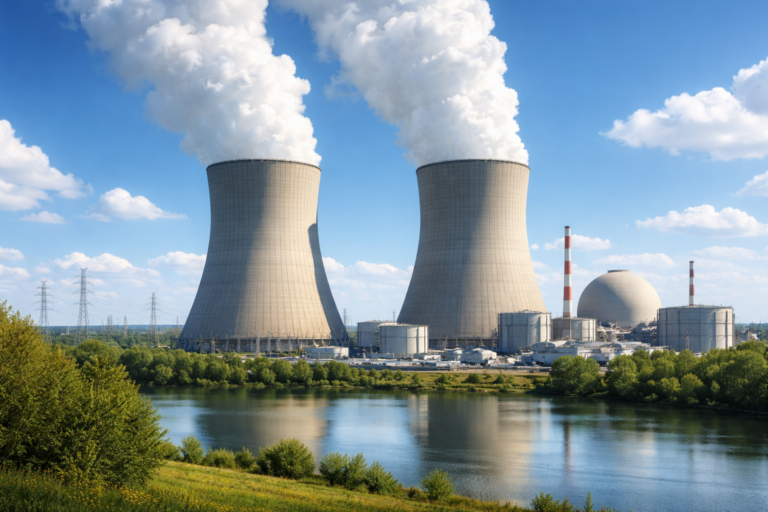
One Nation opposes the legislated ban on commercial nuclear energy, and will move to repeal it. We see no compelling reason for Australia, possessing more than 25% of the planet’s known uranium reserves, to remain ignorant of (and refuse to utilise) a proven emissions-free technology being used safely at more than 450 sites in 28 countries.
Modern nuclear plants can deliver steady, round the clock power that does not depend on the weather, giving households, hospitals, farms, and factories a stable supply they can rely on. Nuclear energy can provide strong support for industry that needs constant power, sit alongside coal, gas, and hydro during any transition, and over time take pressure off older plants that are reaching the end of their life.
Backing nuclear also means backing a high skill, high wage industry that can create new work for trades, engineers, and technicians, especially in regional areas that already host heavy industry and energy infrastructure.
One Nation will advocate for the construction of one advanced pressurised water nuclear reactor to provide about 1400MW of emissions-free baseload power on Australia’s east coast, at a location to be determined in consultation with the Australian community, at an approximate cost of $6.8 billion.
Embracing Hydro
One Nation supports building new dams, and upgrading existing ones, to secure Australia’s water supply for towns, farms and industry. Dams are essential pieces of infrastructure which in addition to mitigating floods and conserving water for human consumption, industry and agriculture, can also generate emissions-free power.
One Nation will support restoration of the $5.4 billion Hell’s Gate Dam project near Townsville, Queenslandand lift the effective unofficial moratorium on new dam construction in Australia. Investing in new dam capacity also means new construction work, long term operational jobs, and stronger regional economies built around a secure and managed water system rather than constant crisis responses.
One Nation will also act to remove environmental offsets that substantially lift the cost of new dams in Australia.
One Nation will also advocate extending, upgrading and expanding Tasmania’s hydro scheme. We do not support the construction of the proposed Marinus Link interconnector as it will only push Tasmania’s electricity costs higher by linking them to renewables based in Victoria. Tasmania can cost-effectively meet its energy demands with an expanded hydro scheme, making renewables in the island state completely unnecessary.
Energy Sovereignty & National Security
Nuclear energy is central to Australia’s energy sovereignty and national security. Many of our key allies already use nuclear to secure their grids and keep power prices under control, while Australia still bans the very technology that could give us a steady base of low emissions generation.
Lifting that ban and planning carefully for nuclear would allow Australia to use proven technology, build long life assets on suitable sites, and keep more control over our own energy future instead of depending on imported fuels and overseas decisions.